Project detail • VR / Medical Visualization • 2024
VR Organ Explorer
A VR learning application designed to help medical students explore human anatomy through interactive 3D organ models in an immersive, low-stress environment.
Project summary
This project was developed as part of a learning technology course and explores how virtual reality can be used to support the study of human anatomy. The goal was to create a hands-on educational tool where medical students could interact with 3D organ models, read organ-specific information, and study anatomy in a more immersive way than with books or static diagrams alone.
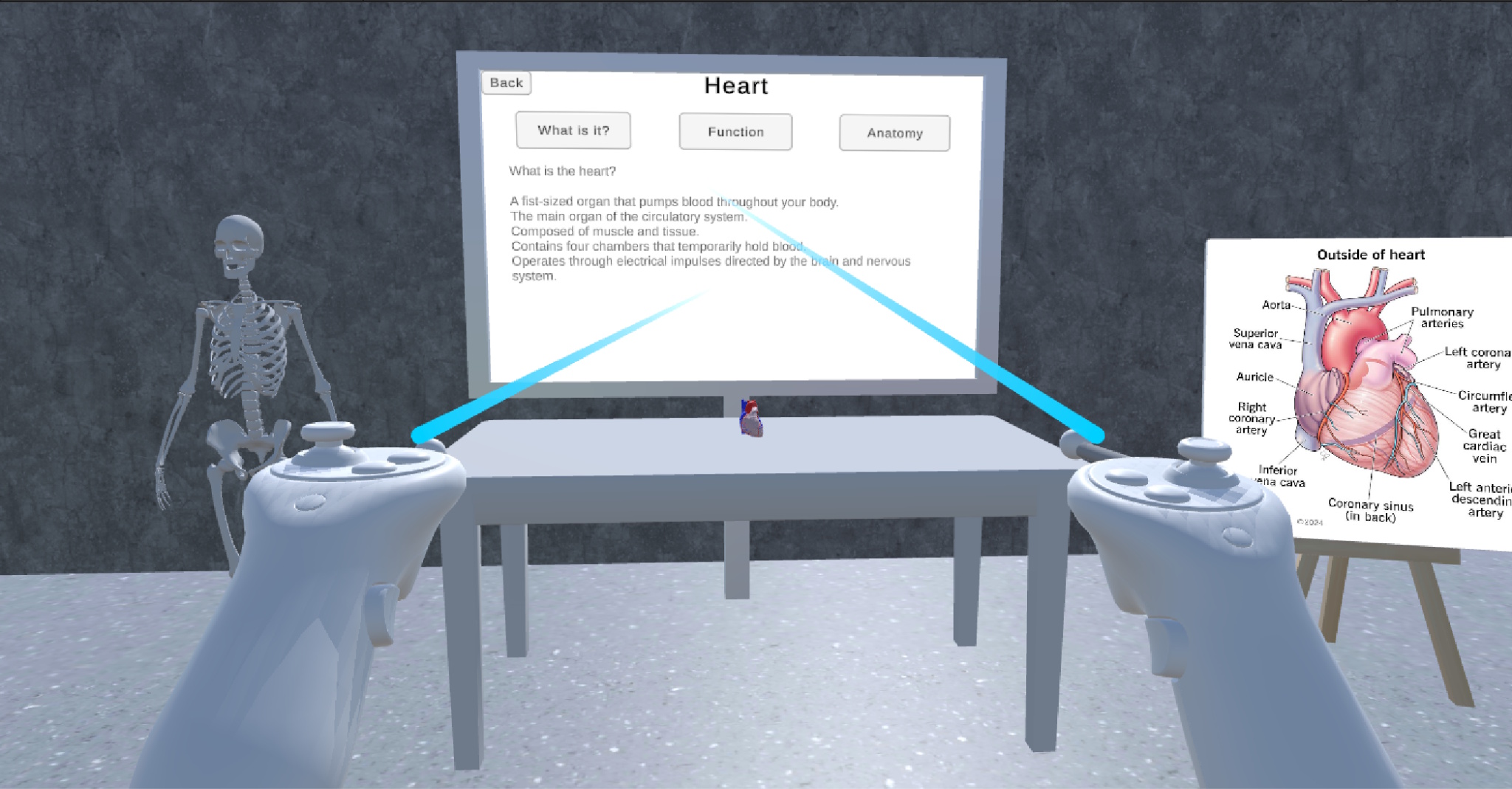
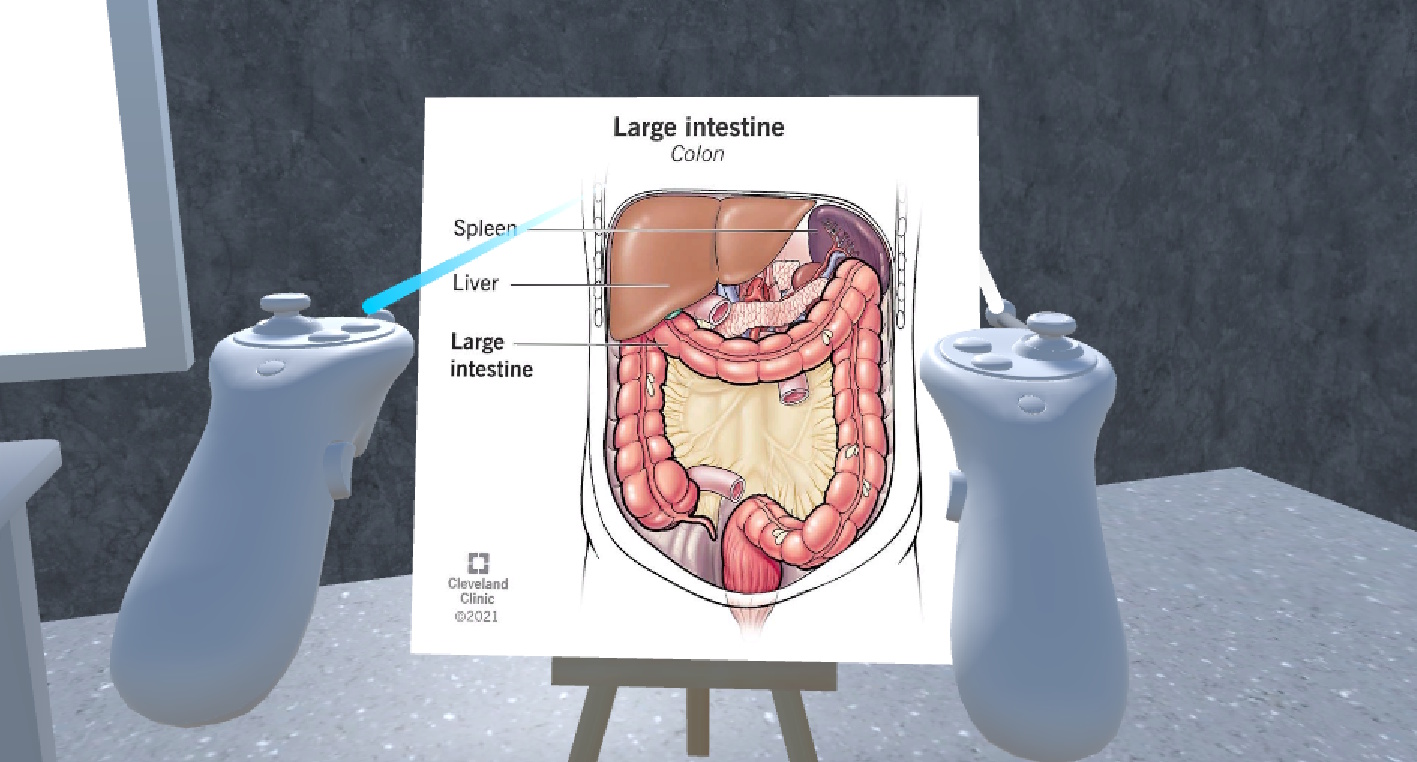
The result was a standalone VR application for Oculus Quest that places the user in a virtual classroom with an interactive organ menu, a table for viewing 3D organ models, a reference skeleton, and a poster board that updates with diagrams of the selected organ. The project demonstrated the potential of VR as a flexible alternative to traditional anatomy labs, especially for home study or when physical lab access is limited.
Main media
Gallery
Overview
The purpose of the project was to create a VR learning application that could give medical students hands-on access to anatomical structures without needing to be in a wet lab or dry lab setting. The project focused on using VR as an immersive and tactile medium that lets users move around organs, inspect them from different angles, and combine direct interaction with supporting written information.
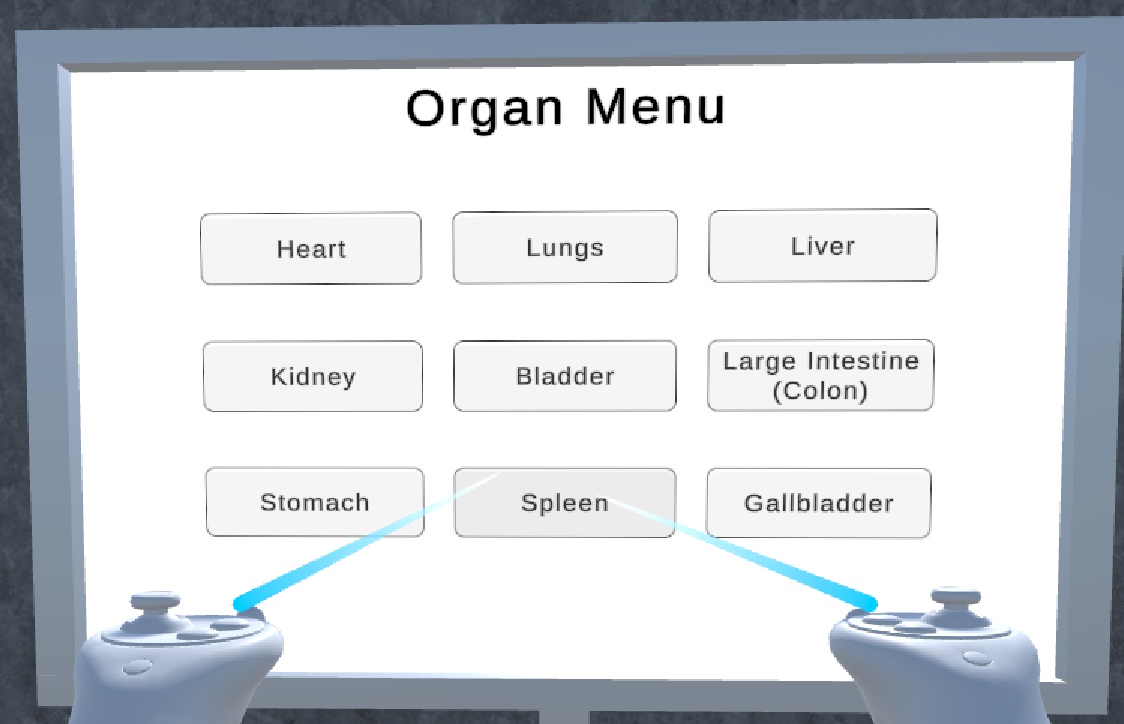
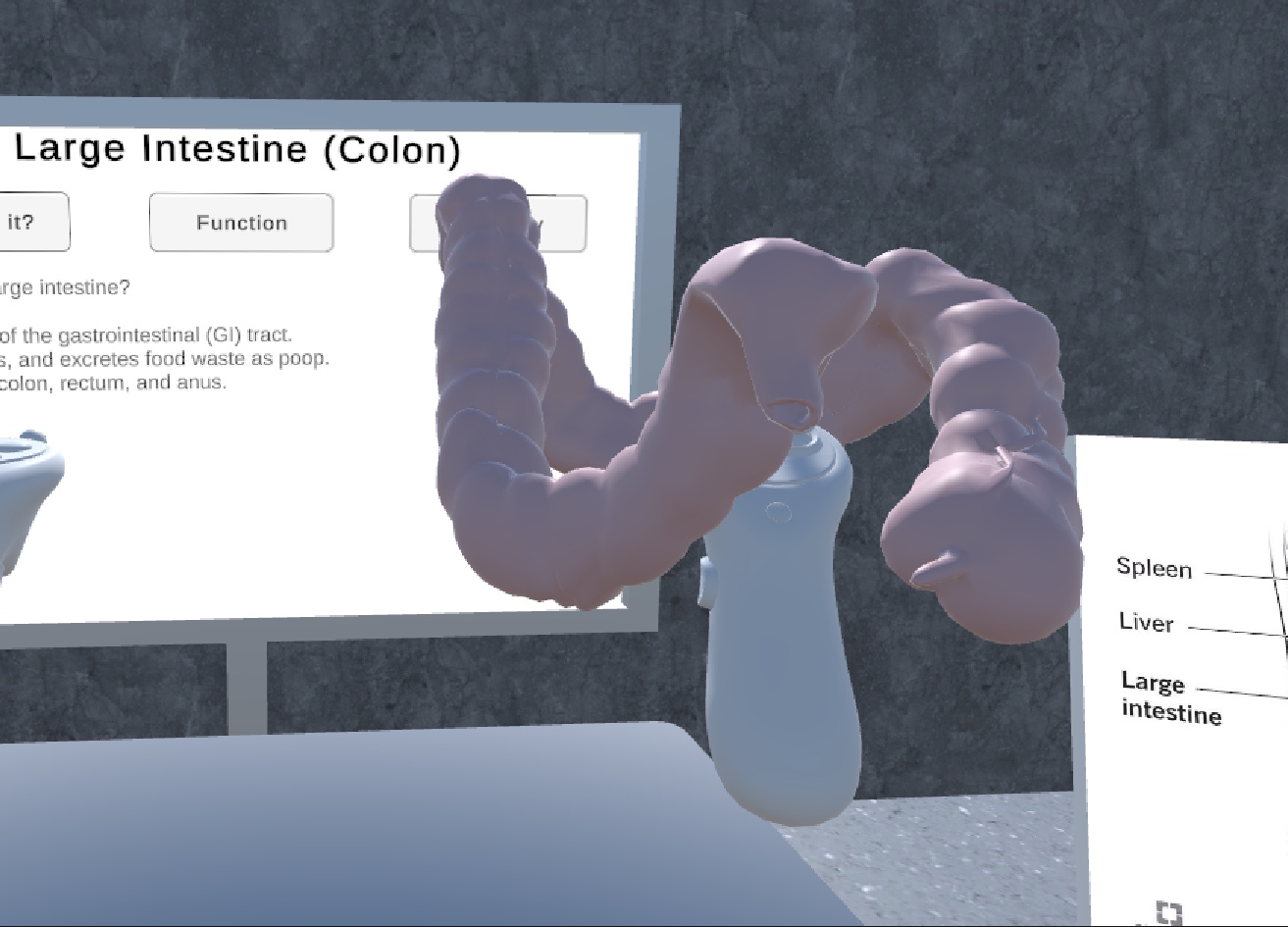
The final application places the user in a virtual classroom containing a table, a screen-based organ menu, a poster board, and a reference skeleton. From the main menu, the user can choose between nine organs: the heart, liver, lungs, kidneys, bladder, large intestine, stomach, spleen, and gallbladder. Selecting an organ loads a detailed 3D model onto the table and updates the information interface in the room.
My role
This was a two-person project, and I handled most of the implementation work in the application itself. My main contribution was building the interactive VR experience and structuring how users moved between the menu, organ selection, and information views.
- Implemented nearly all of the application logic in Unity
- Built the organ selection flow and menu transitions
- Set up the interactive UI for “What is it?”, “Function”, and “Anatomy”
- Handled scene setup, object loading, and application structure
- Integrated the 3D organ viewing workflow into the virtual classroom environment
Process and development
The project began with a paper prototype used to sketch out the virtual environment, the organ interaction flow, and the placement of supporting UI elements. This made it easier to discuss usability and educational structure before moving into implementation. :contentReference[oaicite:3]{index=3}
From there, the project moved into a first digital iteration, where the main goal was to create a functioning VR environment with manipulable organs and a usable interface. Internal feedback showed that smoother interaction and clearer structure were needed, which led to further refinement of both the room layout and the menu system.
In the final version, the application was designed as a standalone Android app running on Oculus Quest. The virtual room included a table, a screen for the organ menu, a poster stand with organ diagrams, and detailed 3D organ models that appeared on the table when selected. The information menu was split into “What is it?”, “Function”, and “Anatomy,” with a back button for returning to the main menu.
Challenges and solutions
Challenge
One of the biggest challenges was balancing immersion with usability and comfort. Because the application runs in VR, it had to feel engaging without causing confusion or discomfort. The report also notes that the detailed heart model was especially demanding for the standalone headset and could affect frame rate.
Solution
The project used a simple room layout and direct interaction model to reduce complexity and keep the experience understandable. Testing also highlighted clear directions for improvement, such as allowing users to grab organs from any point, scale them up, dissect them, and eventually add quiz features for more guided study.
Outcome and reflection
The final application achieved its core goal of creating a hands-on VR anatomy tool for medical students. Test participants responded positively and described the experience as immersive, engaging, and useful as an alternative study tool when access to traditional anatomy facilities is limited. :contentReference[oaicite:7]{index=7}
A particularly strong part of the project was the ability to inspect anatomical structures from all angles in a way that books and flat diagrams cannot offer. At the same time, testing also revealed clear directions for future development, including better grab interaction, organ scaling, dissection features, and quiz-based elements for more guided learning.
Looking back, this project was a strong example of combining immersive technology with learning-focused design. It also showed the importance of user testing in VR, where both educational value and physical comfort have to be considered together.
Want to see more?
You can go back to the projects overview or get in touch if you want to know more about this project.